-
The 988 Lifeline provides easy access to crisis support for emotional distress. 911 focuses on dispatching emergency medical services, fire, and police as needed.
Only a small percentage of 988 Lifeline contacts require contacting emergency services like 911. Most of those are done with the help-seeker’s consent and cooperation. 988 Lifeline crisis counselors will only contact emergency services if there’s an imminent risk to someone’s life that cannot be reduced during the call, text, or chat. In these cases, the crisis counselor shares information with 911 in order to save a life.
-
Yes, the 988 Lifeline is staffed with trained crisis counselors who are available 24/7, 365 days a year.
-
When you call 988, you’ll hear an automated greeting message that features additional options (option 1 for the Veterans Crisis Line, option 2 for the Spanish Line, and option 4 for the Native and Strong Lifeline). You can press 0 to skip these greetings or stay on the line to be connected to a trained crisis counselor. Once you are connected, this person will listen to you, work to understand what you’re experiencing, provide support, and collaborate with you on ways to feel better. They can also connect you with additional help or resources.
-
Crisis counselors can support you through any issue causing emotional stress or crisis. Some examples include:
- Thoughts of suicide or self-harm
- Depression and anxiety
- Feelings of isolation or loneliness
- Trauma or abuse
- Feeling unsafe at home
- Stressed about school, work, or money
- Mental health conditions, or just feeling “off”
- Economic or relationship worries
- Worries about drug or alcohol use
- Concerns about a loved one who needs emotional or crisis support
- Any other concerns making you feel alone or overwhelmed
-
Less than 2% of contacts to 988 in Washington require emergency services. If there is imminent risk to someone’s life that cannot be reduced during the call, text, or chat, the crisis counselor will contact emergency services like 911.
-
988 counselors are fellow Washington residents from communities like yours.
Our counselors are highly trained and ready to support you, no matter what you’re going through.
If a local crisis counselor is not available in a timely manner, then you may be directed to another trained crisis counselor in the United States. The 988 subnetwork lines for Native people, veterans and military families, Spanish speakers, and deaf and hard of hearing people are staffed by trained crisis counselors across the nation.
-
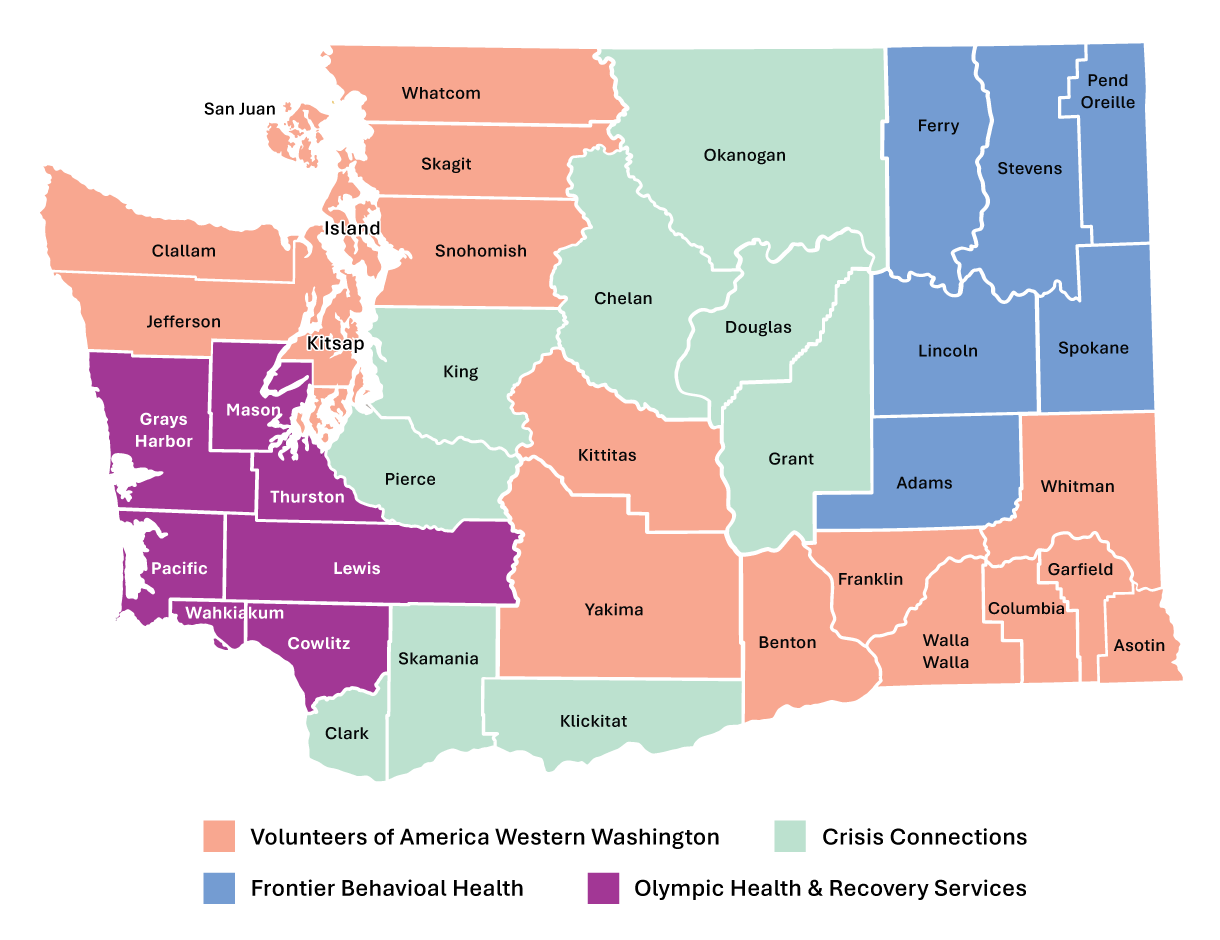
Washington has four 988 Lifeline contact hubs that answer calls, texts, and chats from around the state:
Your call, text, or chat will be directed to one of these contact hubs. If that one of the three centers can’t answer, you’ll be directed to the national backup center.
-
Yes, if you or someone you know is experiencing a mental health crisis or having thoughts of suicide, you can contact 988 for 24/7/365 support. As with all 988 calls, texts and chats, you do not need to provide any personal information to receive support or services.
-
988 crisis counselors come from all walks of life and all parts of Washington, and they receive extensive training before answering a call, text, or chat. Training is interactive and delivered in a variety of formats to promote skill learning. Crisis counselors also receive continuous training and skill checks. All 988 Lifeline contact hubs follow the accreditation standards set by the national 988 administrator, Vibrant Emotional Health. For more information about crisis counselor training, see Washington Crisis Center Best Practices.
-
Yes, people contacting the 988 Lifeline do not need to share personal information to get support or services. The crisis counselor will not know who you are or where you’re located, beyond the phone number or IP address you used to contact 988. If you or someone else needs 911 services, the crisis counselor may ask for information to share with 911 that may be crucial to saving a life.
-
The 988 Lifeline’s call, chat, and text features are all available in Spanish. You can also get interpretation services in over 240 languages and dialects if you call. To use this feature, call 988 and say the name of the language you need. You’ll be connected to an interpreter as soon as possible.
-
If you are Deaf or hard-of-hearing, you can connect with a trained counselor by:
- Videophone – Call 988 with a VP number or connect through the web portal.
- Online chat
- Text – Send any message to 988 to start a text conversation.
- TTY Users: Use your preferred relay service or dial 711 then 988.
If you are a Veteran or service member with hearing loss or are concerned about someone who is:
- Text with a Veterans Crisis Line responder – Send a text message to 838255
- Online chat with a Veterans Crisis Line responder
More information for people who are Deaf or hard-of-hearing.
-
Yes, the 988 Lifeline is free and confidential for all.
-
Yes, The 988 Lifeline is for anyone seeking emotional support for a wide range of reasons, for example:
- Depression and anxiety
- Feeling isolated, loneliness, or like no one cares
- Trauma or abuse
- Feeling unsafe at home
- Mental health conditions or symptoms, or just feeling “off”
- Economic or relationship worries
- Worries about drug or alcohol use
- Concerns about friends or loved ones who need support
- Any other concerns making you feel alone or overwhelmed
-
Yes, you can dial 988 for substance use concerns. In the case of an overdose emergency, call 911 and administer naloxone.
-
The 988 Lifeline does not replace the NSPL phone number but provides an additional, local way for people to reach more crisis centers. You can call either 988 or 1-800-273-TALK (8255) to be connected.
-
988 in Washington is primarily funded by a tax on all radio access lines (mobile, VoIP, and land). The Department of Health also gets federal funding from the Substance Abuse and Mental Health Services Administration, Medicaid Administrative Match funds, and other small short-term grants.
-
The 988 Lifeline is supported by highly experienced, credentialed individuals who are required to undergo extensive training before answering a call, text, or chat. Crisis counselors are here to help you navigate challenges or just lend an ear when you need it.
Training is interactive and delivered in a variety of formats to promote skill learning. To ensure competency, crisis counselors undergo regular training and are often subject to skill checks.
Key areas covered in training include crisis counseling techniques, mental and emotional processes (internal systems), cultural humility, and diversity, equity, and inclusion.
All 988 Lifeline contact hubs adhere to accreditation standards set forth by the federally-designated 988 administrator: Vibrant Emotional Health.
For more information about crisis training, see Washington Crisis Center Best Practices.